
Paint Restoration That Goes Past the Surface
Exterior detailing in Belton for paint contaminated by road film, brake dust, and embedded industrial fallout
Road film from highway driving bonds to paint differently than loose dust—it embeds into the clear coat and requires chemical decontamination to release, not just rinsing. Trevino's Auto Detailing handles exterior detailing in Belton as a mobile service, working at your home or workplace with a full decontamination and protection process that a standard car wash cannot replicate. Vehicles that have accumulated brake dust and road film over months will show it as a rough, dull surface texture that worsens under direct light.
The exterior reset process at Trevino's follows a specific sequence designed to remove contamination without damaging paint. It begins with wheel, tire, and wheel well cleaning, then moves through a pre-rinse, foam pre-soak, and chemical decontamination wash. Iron contamination removal addresses brake dust and metallic fallout particles that have bonded to the surface. Clay treatment follows when paint texture indicates remaining embedded material. Door jambs and windows are cleaned, the paint is inspected for remaining defects, and a premium hydrophobic protection coating is applied as the final step before tire dressing, hand drying, and a final walkthrough inspection. Maintenance exterior service, designed for vehicles already in clean condition, preserves that result between reset appointments.
Request a free inspection-based estimate from Trevino's to assess your vehicle's current paint condition and determine which service level applies.
EXTERIOR ADD-ONS
Paint Protection
Paint Decontamination
Note: These services are already included when required as part of the Exterior Reset.
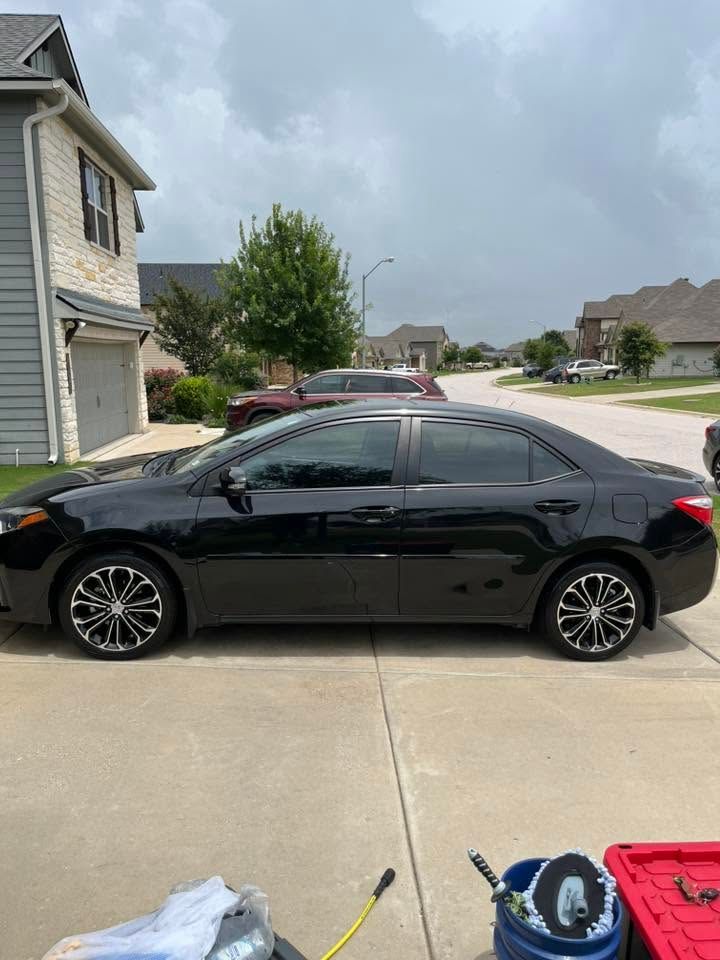
What Proper Exterior Decontamination Requires
The iron contamination removal step is one that separates professional exterior detailing from a wash-and-wax service. Brake dust is composed partly of iron particles that embed into paint during normal driving; once embedded, they begin oxidizing and cannot be removed by soap and water alone. A chemical iron remover reacts with those particles and releases them from the surface before the paint is touched by a wash mitt—skipping this step means those particles get dragged across the clear coat during washing, leaving microscopic scratches that accumulate over time.
After the full reset process is complete, the surface difference is tactile as well as visible. Paint that felt rough or gritty before the clay treatment becomes smooth to the touch. The hydrophobic protection applied at the end causes water to bead and sheet off the surface rather than sitting on the paint, which slows the rate at which road film re-bonds. Wheels that were coated in brake dust bake-on residue emerge clean down to the spoke faces and barrel edges.
Service level is always determined by inspection first, and same-day service is frequently available. Trevino's Auto Detailing is veteran-owned and operated, and the included paint inspection at the close of every reset service identifies any defects that remain after decontamination so you have an accurate picture of the paint's condition going forward.
What Vehicle Owners Ask About Exterior Detailing
Vehicles that accumulate heavy contamination over months require a different approach than those receiving regular upkeep. These questions cover how the process works and what it actually addresses on the paint surface.
What is the difference between exterior detailing and a standard car wash?
A car wash uses soap and mechanical action to remove loose surface dirt; exterior detailing includes chemical decontamination to remove bonded road film and iron particles, clay treatment to smooth embedded contamination, and protective coating application—none of which a car wash provides.
How does iron contamination removal work during an exterior detail?
An iron-reactive chemical is applied to the paint surface and reacts with embedded metallic particles—primarily brake dust—causing them to release from the clear coat so they can be safely rinsed away before the hand wash begins, preventing those particles from being dragged across the paint.
When is clay treatment necessary during an exterior detail?
Clay treatment is used when the paint surface still feels rough or gritty after chemical decontamination, indicating that embedded material remains in the clear coat; running a clean fingertip across a decontaminated panel is a reliable way to detect whether clay is needed before moving to protection.
What does the hydrophobic protection step do for paint?
The hydrophobic coating applied at the end of a reset detail causes water to bead and roll off the surface rather than sheet across it, which reduces how quickly road film and contamination re-adhere to the paint between details.
How should wheels be cleaned differently than painted body panels?
Wheel faces, spokes, and barrel edges require dedicated wheel-safe chemicals rather than general paint soap because brake dust bake-on residue bonds differently than road film; Belton area vehicles driven on highways see substantial brake dust accumulation that can pit uncoated wheel surfaces if left in place long-term.
Trevino's Auto Detailing also performs exterior detailing in Temple, Waco, Killeen, and Salado. To find out whether your vehicle's paint needs a reset detail or a maintenance appointment, contact Trevino's Auto Detailing for an on-site inspection at your location.